What Is XRP (Ripple): How It Works and What This Cryptocurrency Is For
We explain what XRP and Ripple are: how it works, what it is for, how it differs from Bitcoin and Ethereum. Can you buy XRP through Paybis and what to watch out for.
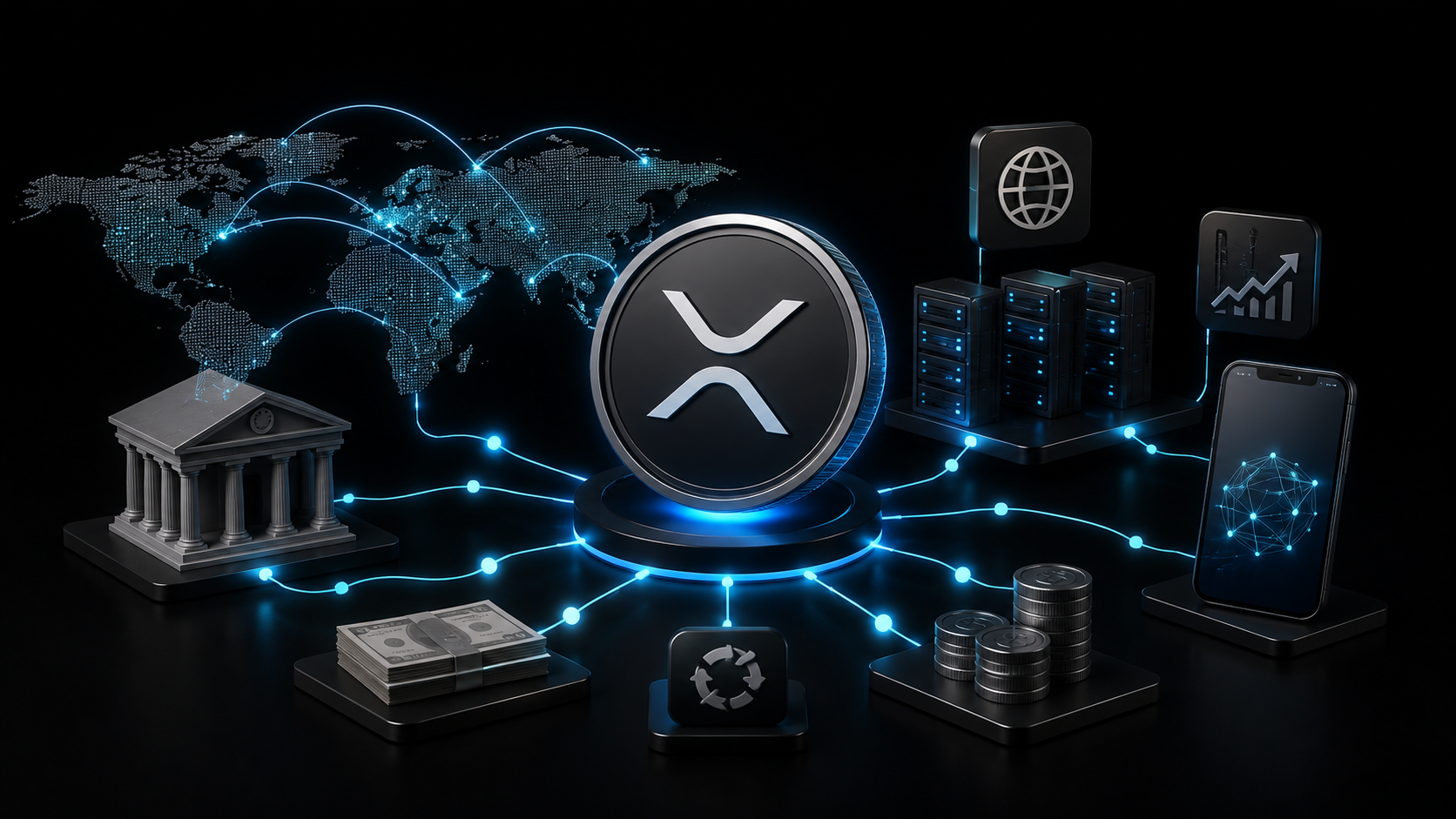
XRP is one of the oldest and most resilient cryptocurrencies. In 2026 it holds third place in the world by market capitalisation — after Bitcoin and Ethereum. Yet most people have a poor understanding of why it exists and how it differs fundamentally from other coins.
This article explains what XRP and Ripple are, how the technology works and why this coin has remained relevant for over a decade.
Ripple and XRP: What Is the Difference
This is the first point of confusion for newcomers.
Ripple is a company. Ripple Labs was founded in 2012 in San Francisco. The company develops payment solutions for banks and financial institutions. Its main product is RippleNet, a payment network for international transfers between banks.
XRP is a cryptocurrency. A digital asset that runs on the XRP Ledger blockchain. XRP was created as a tool for fast and cheap international transfers — a bridge between different currencies.
An important nuance: the XRP Ledger is an open blockchain that exists independently of the company Ripple. However, Ripple Labs holds a significant share of all XRP tokens and periodically releases them onto the market — this is a persistent source of debate in the crypto community about the degree of XRP's decentralisation.
What XRP Is For: The Problem It Solves
To understand XRP you need to understand the problem with international bank transfers.
When you send money from one country to another through a bank, the money passes through a chain of intermediary banks (correspondent banks). Each one adds its own fee. The transfer takes one to several business days. Banks hold frozen funds in various currencies as settlement reserves — these are called nostro accounts. Trillions of dollars are frozen in such reserves worldwide.
XRP offers an alternative: a bank converts currency into XRP, sends it via XRP Ledger to the recipient, who converts it back into the required currency. The transaction takes 3–5 seconds. The fee is fractions of a cent. Frozen reserves are not needed.
This is precisely why Ripple is oriented primarily toward banks and financial institutions — rather than retail users like Bitcoin or Ethereum.
How the XRP Ledger Works
The XRP Ledger uses neither Proof-of-Work (mining) nor Proof-of-Stake. It runs its own XRPL Consensus Protocol.
Transactions are confirmed by trusted validators — independent network nodes that participate in reaching consensus. Every 3–5 seconds a new "ledger" (a record of the network state) is created in which all transactions from that period are recorded.
This provides speed unachievable for Bitcoin or Ethereum at the base layer. At the same time the network consumes minimal energy compared to mining blockchains.
Fixed Supply Without Mining
This is a fundamental difference between XRP and Bitcoin.
All 100 billion XRP tokens were created in advance at the time of the network launch in 2012. No new tokens are created. There is no mining.
A significant portion of tokens was initially distributed between Ripple Labs and the founders. The company holds a large share of XRP in escrow contracts with a set amount released to the market each month — this is a controlled additional supply mechanism that critics of decentralisation challenge.
Unlike Bitcoin with its hard cap of 21 million coins — XRP does not have scarcity through limited mining but has controlled supply through company policy.
The SEC Lawsuit: Important Context
XRP cannot be discussed without mentioning the legal proceedings between Ripple and the US Securities and Exchange Commission (SEC).
In 2020, the SEC brought charges against Ripple Labs for conducting an unregistered securities offering through XRP sales. The case lasted several years and attracted wide attention throughout the crypto industry.
In 2023–2024 the court issued partial rulings: sales of XRP on exchanges to retail users do not constitute securities sales, while institutional sales remain a separate question. The case significantly influenced the regulatory climate in the US and has not been fully resolved.
For a buyer of XRP through Paybis this means: buying XRP as a cryptocurrency is a standard retail transaction that does not constitute the purchase of a security according to the court ruling. However, XRP's regulatory history remains more complex than Bitcoin's or Ethereum's.
How XRP Differs from Bitcoin and Ethereum
Bitcoin was created as decentralised digital money and a store of value. No central company, fully decentralised, fixed supply of 21 million.
Ethereum is a programmable blockchain for smart contracts and decentralised applications. The foundation of the DeFi and NFT ecosystem.
XRP is a specialised tool for fast international transfers. Oriented toward banks and financial institutions. There is a central company (Ripple Labs) with significant influence over the ecosystem. Not designed for DeFi or smart contracts in the traditional sense.
These are different tools for different purposes — not direct competitors.
How to Buy XRP Through Paybis
XRP is available to buy on Paybis with a Visa or Mastercard. The process is standard: select XRP in the converter, enter the amount, provide your XRP Ledger wallet address, pay by card.
An important feature of XRP wallets: to receive XRP a wallet address must hold a minimum reserve of 10 XRP. This is not a fee — it is a built-in network requirement to activate an address. A new address without the minimum reserve cannot receive transactions. Make sure your wallet supports XRP and that you understand this requirement.
Another detail: when sending XRP to exchanges a Destination Tag is often required — a numeric identifier that specifies the correct account at the exchange address. Without the correct tag funds may be lost. When sending to a personal non-custodial wallet no tag is needed.