ERC-20 vs. TRC-20: Choose the Right Crypto Network
Learn how to choose the right blockchain network (ERC-20 vs TRC-20) when buying crypto to avoid permanent fund loss.
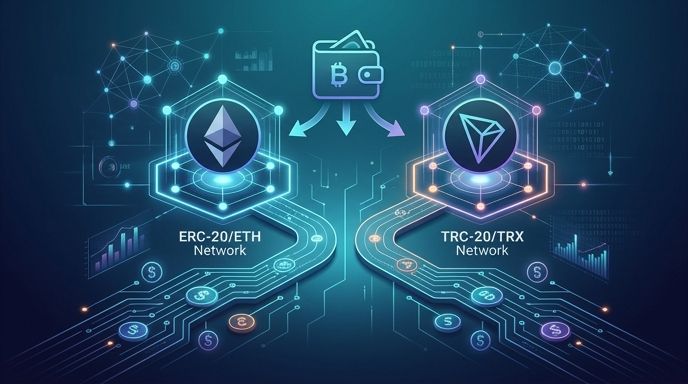
Key Takeaways:
- Always match the network: Your sending platform and receiving wallet must use the exact same network (e.g., ERC-20 to ERC-20).
- Fee differences: TRC-20 (TRON) transactions are faster and cheaper, while ERC-20 (Ethereum) offers high security but higher fees.
- Irreversible losses: Sending crypto to the wrong network results in permanent loss of funds.
- Paybis simplicity: Buying crypto with Paybis ensures a smooth transfer directly to your preferred network and personal wallet.
Sending cryptocurrency to the wrong network is one of the most common mistakes made by beginners. If you select the wrong blockchain network during a transaction, your funds could be lost forever. Blockchains do not communicate with each other automatically, making network selection a critical step in any purchase.
Why Network Selection Matters
When buying or transferring cryptocurrency, selecting the correct network is just as important as entering the right wallet address. Think of networks as different railway systems with different track widths; a train built for one track cannot run on another.
If you send an ERC-20 token to a TRC-20 address, the transaction will process on the blockchain, but your wallet will not be able to access the funds. In most cases, these assets are gone permanently.
Understanding ERC-20 vs. TRC-20
These two network standards are most commonly associated with USDT (Tether), the world's most popular stablecoin. However, they represent two completely different blockchains:
- ERC-20 is the technical standard for smart contracts on the Ethereum blockchain. It is highly secure and widely supported, but network congestion can lead to high transaction (gas) fees and slower processing times.
- TRC-20 is the standard used on the TRON blockchain. It was designed to offer high-speed transactions with fraction-of-a-cent fees, making it the preferred choice for microtransactions and budget-conscious users.
Key Differences At a Glance
- Transaction Fees: ERC-20 fees can range from $2 to $30+ depending on Ethereum network congestion. TRC-20 fees are consistently low, often costing less than $1 to $2.
- Transaction Speed: TRC-20 transactions are processed almost instantly, usually under 2 minutes. ERC-20 transactions can take anywhere from a few minutes to over an hour during high traffic.
- Address Formats: You can easily tell them apart by looking at the first character of the wallet address. ERC-20 addresses always start with '0x', while TRC-20 addresses always start with 'T'.
Critical Mistakes to Avoid (What Not to Do)
- Never assume all USDT is the same: USDT exists on multiple blockchains. You cannot send TRC-20 USDT to an ERC-20 address directly.
- Do not ignore address prefixes: Always double-check if your destination address starts with '0x' (Ethereum) or 'T' (TRON) before confirming the transaction.
- Avoid skipping a test transaction: If you are moving a large amount of money, send a tiny test transaction first to ensure you have chosen the correct network.
How to Safely Buy Crypto on the Right Network
When buying cryptocurrency via Paybis, the platform makes it simple to choose your preferred network. Here is how to complete the process securely:
- Open your private wallet: Find the specific asset you want to receive (e.g., USDT) and select either the Ethereum (ERC-20) or TRON (TRC-20) network. Copy the receiving address.
- Match the network on Paybis: During the purchase process, select the exact same network that matches your wallet address.
- Paste and verify: Paste the address and verify that the format matches (e.g., starts with 'T' if you selected TRC-20).
- Pay and receive: Complete the fast AI-powered KYC (under 3 minutes) and pay using your Visa or Mastercard. Your crypto will be delivered directly to your wallet instantly.
FAQ
Can I recover crypto sent to the wrong network?
No. In almost all cases, transactions sent to the wrong network are irreversible. Because blockchain networks are decentralized and final, there is no central authority or customer support to cancel or roll back the transaction.
How do I know which network my private wallet supports?
Open your wallet app, tap on the specific asset (like USDT), and tap 'Receive'. The app will display the address and explicitly state which network it belongs to (e.g., Ethereum/ERC-20 or TRON/TRC-20).
Why is TRC-20 so much cheaper than ERC-20?
The TRON network uses a delegated Proof-of-Stake consensus mechanism that allows it to process transactions much faster and with higher throughput than Ethereum. This design keeps network congestion low, resulting in extremely cheap fees.