What Is USDT and Why Do You Need a Stablecoin in 2026
We explain what USDT is, how a stablecoin differs from Bitcoin, why you would buy it and how to use it. A simple explanation for anyone just getting started with crypto.
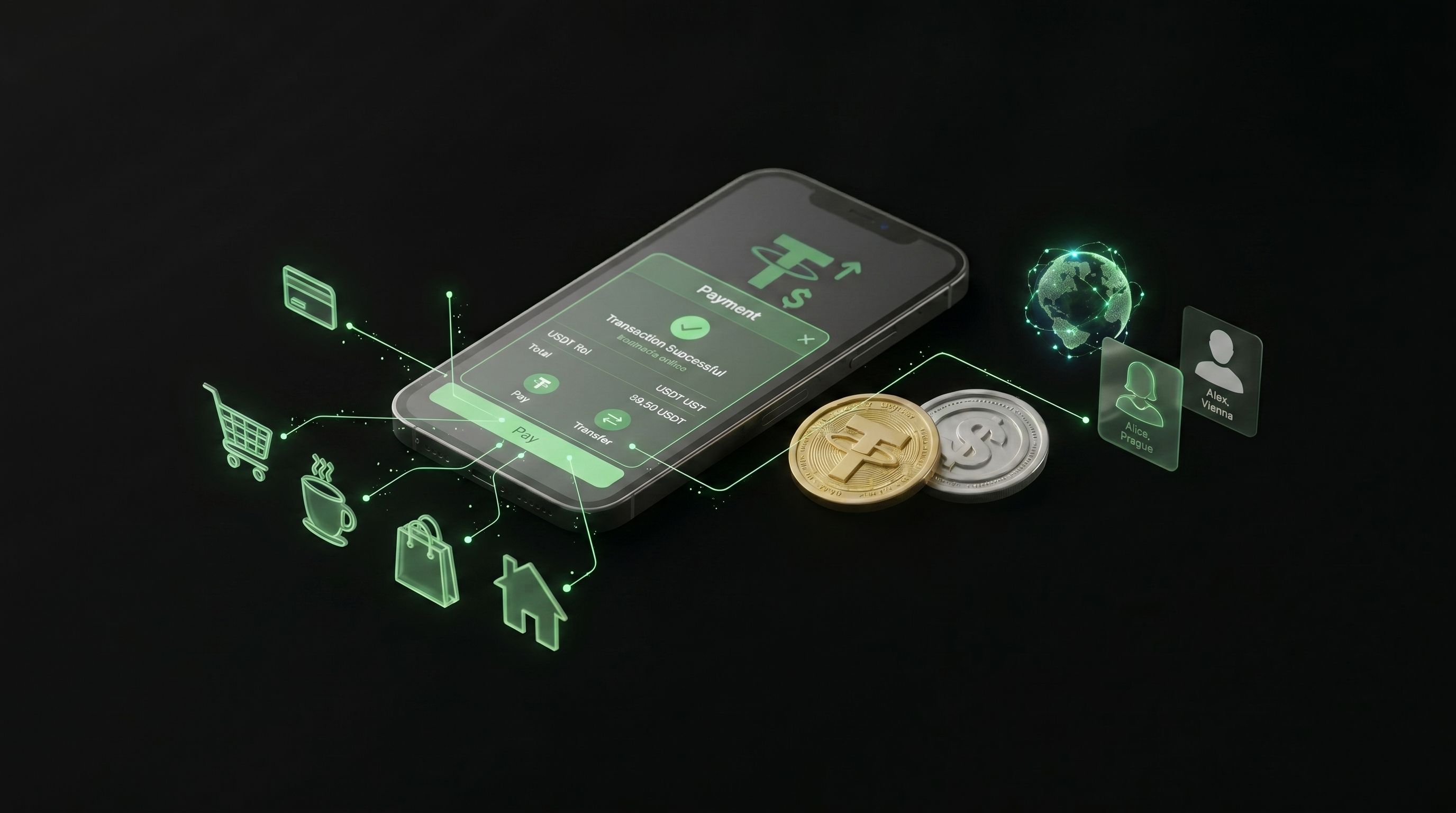
On the Paybis platform, USDT always sits alongside Bitcoin and Ethereum. Many newcomers ignore it — it is unclear why you would buy a "cryptocurrency" that does not go up in price. But that is precisely what makes USDT useful. This article explains what it is and what tasks it is suited for.
What Is USDT in Simple Terms
USDT is a stablecoin. Stablecoin means stable coin: its exchange rate is pegged to the US dollar at a 1-to-1 ratio. One USDT is always worth approximately one dollar — regardless of what is happening in the crypto market.
While Bitcoin can rise 10% or fall 15% in a single day, USDT remains stable. This is not a bug or a limitation — it is a deliberate property that makes it suitable for tasks where predictability matters.
USDT is issued by Tether Limited. As of 2026, USDT's market capitalisation exceeds 130 billion dollars, making it one of the largest crypto assets in the world and the most widely used stablecoin across all major platforms.
How USDT Maintains Its Dollar Peg
This is a question that often comes up: how does a coin "know" it should be worth a dollar?
Tether holds reserves — real assets (dollars, short-term bonds, other liquid instruments) — roughly equal to the number of USDT in circulation. If 130 billion USDT are in circulation, Tether holds approximately the same amount in reserves. This creates a mechanism: anyone can, through authorised partners, exchange USDT for real dollars at a 1:1 rate, and this keeps the price stable.
In practice, the USDT rate rarely deviates from the dollar by more than a fraction of a percent. For everyday use, it functions like a digital dollar.
Which Networks USDT Exists On
This is an important practical point to understand before buying.
USDT exists on several blockchain networks simultaneously. Each network is a separate version of the token with different characteristics.
USDT on the Ethereum network (ERC-20) is the most widely supported version, accepted everywhere. The transfer fee is higher than on other networks — several dollars depending on Ethereum network congestion.
USDT on the Tron network (TRC-20) is the fastest and cheapest version for transfers. A transaction confirms in 1–3 minutes with minimal fees. This version is most commonly used for quick transfers between wallets and exchanges.
When buying USDT through Paybis, it is important to make sure the network in the transaction matches the network your wallet supports. If you created a wallet on the Tron network and are expecting TRC-20 USDT, but the transaction arrives on the Ethereum network, the funds may not appear. Always check the network in your settings before confirming.
Why Buy USDT When Regular Dollars Exist
This is the most common question — and it has several practical answers.
International transfers without banks. Sending USDT anywhere in the world takes a few minutes and costs almost nothing in network fees. No bank transfers, no business days of waiting, no limits on amounts. For those working with international partners or freelancers, this is a real alternative to traditional transfers.
Holding value in dollars within the crypto ecosystem. If you work with cryptocurrencies — trading, using DeFi services, wanting to keep funds in crypto — USDT lets you do this without currency risk. Sold Bitcoin before a drop? Move it into USDT and the value of your holdings will not change while the market falls.
Paying for goods and services in crypto. Many online services, freelancers and platforms accept USDT as a payment method — precisely because its rate is predictable for both sides of the transaction.
Access to DeFi and crypto tools. Most decentralised finance protocols work with USDT. If you want to provide liquidity or use other crypto instruments, USDT is often the starting point.
How USDT Differs from Bitcoin and Ethereum
The difference is fundamental and important to understand.
Bitcoin and Ethereum are volatile assets. Their prices are set by the market and change every second. They can multiply in value and fall by 50–70%. People buy them in expectation of price growth or to use within their respective ecosystems.
USDT is a tool for stability and settlements. You do not buy it to profit from price growth — by design, it does not grow. You buy it to keep value predictable, to transfer money, or to use as a base currency within the crypto ecosystem.
To use a traditional finance analogy: Bitcoin is like a stock, and USDT is like a dollar in your account. Different tools for different tasks.
How to Buy USDT Through Paybis
USDT is available for purchase on Paybis with a Visa or Mastercard just like Bitcoin or Ethereum. The process is identical: select USDT in the converter, enter an amount, choose a network (ERC-20 or TRC-20), complete verification on your first purchase, and pay by card.
An important point when choosing a network: if you plan to use USDT for fast transfers with minimal fees, choose TRC-20. If you need maximum compatibility with various services and exchanges, choose ERC-20.
After purchase, USDT is sent to your wallet. You can store it in any wallet that supports the relevant network — most popular mobile wallets support both versions.
Should You Buy USDT as Your First Cryptocurrency
For a complete introduction to how a crypto wallet and blockchain transactions work, USDT is a good choice. The stable exchange rate removes volatility risk: if you want to try sending cryptocurrency for the first time, it is better to do so with USDT where the rate is predictable rather than with Bitcoin.
If your goal is to explore cryptocurrency as a potential investment instrument, consider Bitcoin or Ethereum. USDT does not increase in value by design.
In practice, most people end up with both in their wallet: Bitcoin or Ethereum for long-term holding, and USDT for payments and transfers. They are two tools that solve different tasks and complement each other well.