What is a Crypto Memo or Tag? Avoid Losing Your Funds
Learn what a crypto memo or destination tag is, why it is crucial for certain coins, and how to use it safely to never lose your funds.
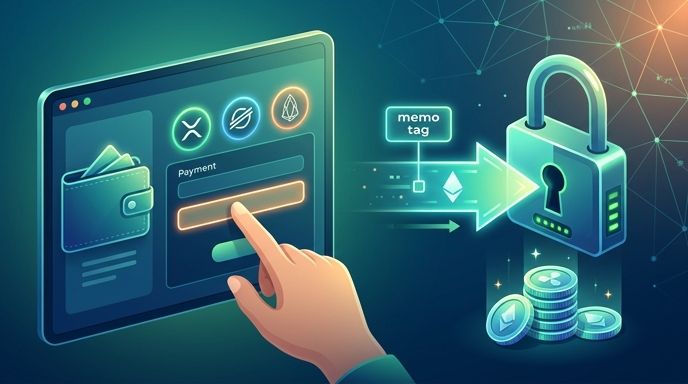
When you purchase or transfer certain cryptocurrencies, you might see a field asking for a destination tag or memo. Ignoring this field or filling it out incorrectly is one of the quickest ways to lose your digital assets permanently.\n\nUnlike Bitcoin, where a standard wallet address is all you need, specific networks require this additional identifier to route your transaction to the correct account.\n\n### Key Takeaways\n Crucial for Shared Addresses: Memos and destination tags are required when sending crypto to centralized exchanges that use one main address for all users.\n Specific Coins Only: This requirement primarily applies to assets like XRP, Stellar (XLM), EOS, and BNB.\n Non-Refundable Errors: Forgetting to include a tag usually results in lost funds, as transactions on the blockchain cannot be reversed.\n Private Wallets Differ: Sending crypto to a private, non-custodial wallet usually does not require a memo.\n\n---\n\n## What Is a Memo or Destination Tag?\n\nA destination tag (or memo) is a unique numerical or text identifier assigned to individual accounts on a shared blockchain address.\n\nThink of a large apartment building. The street address gets the mail to the building, but the apartment number ensures the mail reaches your specific door. In this analogy, the blockchain address is the apartment building, and the memo is your apartment number.\n\nCentralized platforms use a single main wallet address to receive deposits for thousands of customers. The destination tag is the only way the platform knows which specific user account should be credited with the incoming funds.\n\n---\n\n## Which Cryptocurrencies Require a Memo?\n\nNot all digital currencies use this system. You will most commonly encounter memos and tags when dealing with high-speed, low-fee networks:\n\n XRP (Ripple): Uses a Destination Tag (always numeric).\n Stellar (XLM): Uses a Memo (can be text or numeric).\n EOS: Uses a Memo (usually numeric).\n Binance Coin (BNB): Uses a Memo on the BNB Beacon Chain (BEP-2).\n\nIf you are buying or transferring Bitcoin (BTC) or Ethereum (ETH), you do not need to worry about destination tags or memos.\n\n---\n\n## Critical Mistakes to Avoid\n\nTo protect your funds, avoid these common errors when processing transactions:\n\n Leaving the Memo Field Blank: If the receiving platform provides a tag, you must use it. Leaving it empty means your funds will go to the platform's main wallet, but they won't know they belong to you.\n Typing the Tag Manually: Just like wallet addresses, manual typing leads to typos. Always use the copy-and-paste function or scan the QR code.\n Writing Custom Messages: A 'memo' field in crypto is not for writing notes like 'Thanks for the help.' It must only contain the exact code provided by the receiving platform.\n\n---\n\n## How to Transfer Safely: Step-by-Step\n\nWhen buying crypto through a recommended partner like Paybis or transferring to another platform, follow these steps:\n\n1. Locate the Deposit Info: On the receiving exchange, select the coin (e.g., XRP) and copy the deposit address.\n2. Copy the Tag: Immediately copy the Destination Tag or Memo displayed right next to the address.\n3. Paste Both Accurately: In your sending wallet or purchase screen, paste the address into the address field and the tag into the designated 'Memo' or 'Tag' field.\n4. Verify Before Sending: Double-check that the last 4 digits of both the address and the tag match the destination source before confirming the transaction.\n\n---\n\n## FAQ\n\n### What happens if I forgot to include the memo or tag?\nYour funds are sent to the destination exchange's main wallet but are not credited to your account. To recover them, you must contact the receiving exchange's customer support, provide the transaction ID (TXID), and prove ownership. This recovery process can take weeks and may incur a fee.\n\n### Do I need a memo when sending to a private wallet?\nGenerally, no. If you are sending XRP or XLM to a private, non-custodial wallet (like a Ledger hardware wallet where you own the private keys), a memo is usually not required. However, always check your wallet's specific instructions before proceeding.\n\n### Is a destination tag the same as a transaction ID (TXID)?\nNo. A destination tag is an address routing identifier used before a transaction is sent. A transaction ID (TXID) is a unique transaction receipt code generated by the blockchain network after the transaction has been processed.