Why You Must Buy Crypto to a Private Wallet
Learn why buying crypto directly to a personal, private wallet is safer than leaving it on an exchange and how to do it easily.
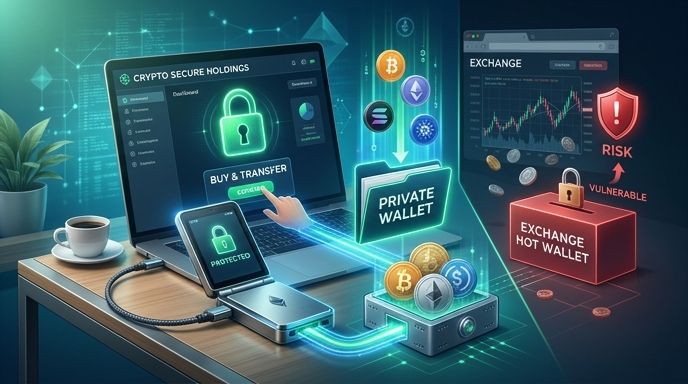
Key Takeaways
- Absolute Control: Buying crypto directly to a private (non-custodial) wallet ensures you own your private keys.
- No Exchange Risk: Storing assets on an exchange exposes you to hack risks, platform insolvency, and withdrawal freezes.
- Direct Delivery: Modern gateways like Paybis send purchased crypto straight to your personal wallet immediately after payment.
- First-Time Promo: You can buy your first crypto with zero platform fees using a trusted debit or credit card.
The Hidden Danger of Exchange Wallets
Many beginners buy their first cryptocurrency on centralized trading platforms and leave it there. While convenient, this is highly risky. When your crypto sits on an exchange, you do not actually own it. You only own a claim to it.
The exchange holds the private keys—the cryptographic passwords that unlock the funds. If the exchange suffers a security breach, goes bankrupt, or freezes accounts, your assets could disappear instantly. This risk is why the crypto community says: "Not your keys, not your coins."
What is Direct-to-Wallet Buying?
The safest approach is to buy cryptocurrency and have it delivered directly to your external, personal wallet. This is known as non-custodial ownership.
When you use a direct delivery service like Paybis, you provide your personal wallet address during the checkout process. Once your payment via Visa or Mastercard is processed, the crypto goes straight to your wallet. There is no middleman holding your funds, drastically reducing your security exposure.
Critical Mistakes to Avoid When Buying Directly
To ensure your direct purchase goes smoothly, avoid these common beginner pitfalls:
- Copying the wrong address: A single typo will result in permanent loss. Always use the copy-to-clipboard feature and verify the first and last four characters of your address.
- Network mismatches: Ensure you are sending the right coin on the right network. For example, never send Ethereum (ERC-20) to a Bitcoin address.
- Using public Wi-Fi without a VPN: If you are entering payment details or accessing your wallet, secure your connection to prevent hackers from intercepting your data.
- Exposing your recovery phrase: Your wallet's seed phrase must never be saved digitally. Write it on paper and store it securely offline.
How to Securely Buy Crypto Direct to Your Wallet
Following a safe, structured process is the best way to start your crypto journey:
- Set up a non-custodial wallet: Download a reputable, self-custodial wallet (such as BlueWallet, Trust Wallet, or Electrum) and securely back up your seed phrase.
- Copy your deposit address: Select the specific cryptocurrency you want to receive and copy its unique deposit address.
- Initiate the purchase: Navigate to our recommended partner, Paybis, which specializes in direct-to-wallet transactions.
- Complete quick verification: Submit your ID for an AI-powered KYC check that takes less than 3 minutes.
- Execute the payment: Pay securely with your credit or debit card. Your crypto will be delivered directly to your wallet instantly. If this is your first purchase, take advantage of the zero platform fee promotion.
FAQ
What is the difference between a custodial and non-custodial wallet?
A custodial wallet is managed by a third party (like an exchange), meaning they control your private keys. A non-custodial wallet gives you full control over your private keys, making you the sole custodian of your funds.
Is it safe to buy crypto directly with a credit card?
Yes, provided you use a regulated, compliant platform. Platforms like Paybis follow strict EU and US regulations, feature advanced encryption, and deliver the purchased assets directly to your secure external wallet.
What should I do if my transaction takes longer than expected?
Do not panic. Blockchain transactions can sometimes experience delays due to network congestion. You can track your purchase using the transaction ID (TXID) on a public blockchain explorer to monitor its real-time status.