Why Crypto Prices Change at Checkout: Avoiding Slippage
Ever noticed the price of Bitcoin change right before you click buy? Learn why crypto rates fluctuate at checkout and how to secure the best rate.
Key Takeaways
- Crypto volatility means prices change second-by-second, leading to differences between the starting quote and the checkout price.
- Slippage is the natural gap between the expected price of your trade and the actual price when executed.
- Reputable platforms like Paybis offer a guaranteed price lock during checkout to shield you from sudden price jumps.
- Preparing your wallet and completing identity verification beforehand minimizes the risk of price changes.
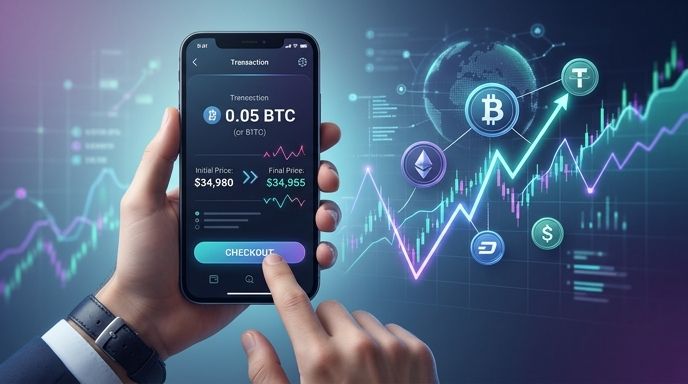
You select your cryptocurrency, enter your payment details, and get ready to buy. But right before you hit confirm, you notice the total amount of crypto you will receive has slightly changed. This is a common experience for beginners, caused by market volatility and a mechanism known as "slippage."
What is Slippage and Why Does It Happen?
The cryptocurrency market operates 24/7 with high trading volume. Because there is no central authority, the price of digital assets fluctuates every second based on global supply and demand.
When you initiate a transaction, the price displayed is an estimate. By the time your payment is processed, the actual market price may have moved up or down. This gap between the expected price and the execution price is called slippage.
How Crypto Platforms Handle Price Changes
To protect users, different platforms handle checkout fluctuations in two main ways:
- Real-time updating quotes: The platform continuously refreshes the rate until you pay.
- Guaranteed price locks: The exchange holds the quoted rate for a short window (typically 15 to 30 minutes) to give you time to complete the transaction.
For example, when using a premium partner like Paybis, you get a transparent fee structure and a temporary price freeze. This ensures you know exactly how much cryptocurrency will land in your wallet before you swipe your card.
Critical Mistakes to Avoid at Checkout
To keep your transaction smooth and avoid losing money to sudden price swings, avoid these critical errors:
- Delaying the payment process: If you leave the checkout tab open for too long, the rate will expire, forcing you to accept a new, potentially worse rate.
- Buying during extreme market events: Avoid purchasing when a major news event breaks. High volatility spikes slippage risks.
- Using slow payment methods: Bank transfers can take days to clear, meaning the price of your crypto will likely be completely different by the time the funds arrive. Use Visa or Mastercard debit cards for instant execution.
- Skipping KYC preparation: If you have not verified your identity, your transaction will pause. While you undergo verification, the market price will continue to move.
How to Get the Best Price
- Verify your identity first: Complete your KYC verification before you initiate a buy order. With AI-powered tools on platforms like Paybis, verification takes less than 3 minutes, meaning you can lock in your price immediately.
- Transact during stable hours: If you are a long-term investor, buying during periods of lower volatility helps you avoid drastic price shifts.
- Keep your wallet address ready: Do not waste time setting up a wallet at checkout. Have your destination public address copied and ready to paste.
FAQ
What is a guaranteed price lock?
A guaranteed price lock is a feature where a crypto platform promises to honor a specific exchange rate for a limited time while you enter your card details. This protects you from market movements during checkout.
Does slippage mean I am paying hidden fees?
No, slippage is not a fee. It is a natural result of price movement in a live market. However, transparent platforms will clearly separate their processing fees from the current network rate so you can see where every cent goes.
Can slippage work in my favor?
Yes, slippage can be positive. If the price of your cryptocurrency drops between the time you start your checkout and the time the transaction executes, you might receive slightly more crypto than initially expected.
Why does my card transaction speed matter for the price?
Instant payment methods like credit or debit cards allow the exchange to finalize the transaction immediately at the locked rate. Slow payment methods cannot guarantee the checkout price because the funds arrive much later.